Terminale · Aotearoa New Zealand · Look and compare
English-speaking Oceania · Hunt for the Wilderpeople
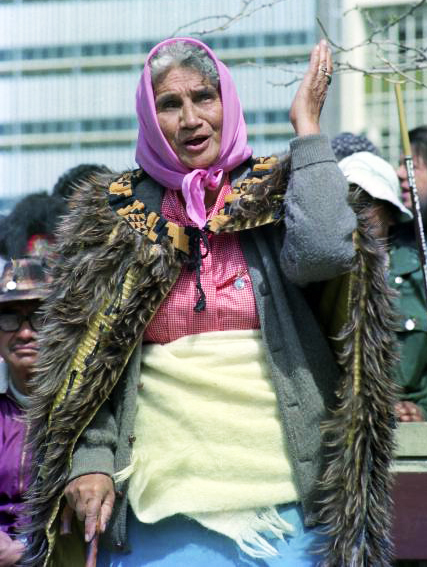
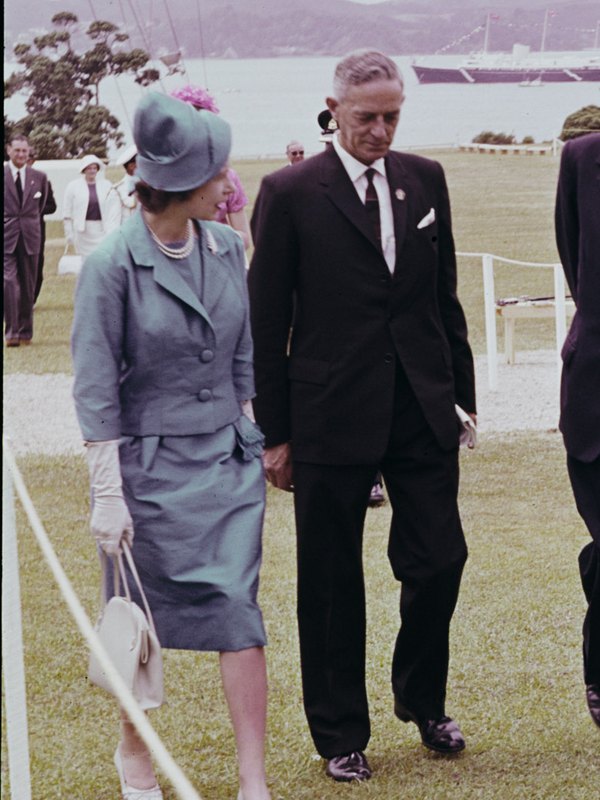
What do these two women have in common? What is different?
First photo: Christian Heinegg, C F Heinegg Collection, Alexander Turnbull Library, Wellington, reuse permitted, via Wikimedia Commons. Second photo: Michael Willison, Auckland Libraries Heritage Collections 1902-018, CC BY.
Look and compare
Look at the two photos for one minute, in silence. Then describe them with a partner. You don’t need to know who these women are: just look carefully.
- In the first photo, I can see… In the second photo, there is…
- Both women are wearing…
- One is… while the other…
- I think the pink scarf…
- The woman in the pink headscarf looks… because…
- She might be… / She must be… / She can’t be…
- The biggest difference is…
Useful words: a headscarf · a hat · a feather cloak · a suit · white gloves · pearls · to raise your hand · to speak to a crowd · to walk past
Who are they?
The woman in the pink headscarf: Whina Cooper, a Māori leader, aged 79, speaking to the Māori Land March in Hamilton, New Zealand, on 25 September 1975. She is wearing a headscarf and a Māori feather cloak. You will meet her again in session 2.
The woman in the blue hat: Queen Elizabeth II, Queen of New Zealand, at Waitangi during her royal tour in February 1963. Waitangi is the place where the Treaty between the British Crown and Māori chiefs was signed in 1840.
So, what do they have in common now? Think about clothes, power, the land and the Treaty.
Le paradoxe de l’ouverture (idée de Carole Paoli Pompougnac)
Regardez Whina Cooper : son foulard est noué sous le menton, comme ceux que la reine portait si souvent hors des cérémonies ; son foulard rose répond aux tenues de couleurs vives qui étaient la signature de la reine (ici, un ensemble et un chapeau bleus). Et par-dessus son gilet, elle porte une cape de plumes māori (kahu huruhuru), vêtement de prestige. Sur la photo de 1963, la reine porte un chapeau et non un foulard : c’est la manière de nouer le foulard, et la couleur, qui font écho.
L’angle : les peuples autochtones se sont approprié la culture britannique à leur manière. Cette appropriation, ils ne pouvaient pas l’éviter (école en anglais, terres perdues, lois de la Couronne), mais ils l’ont retravaillée et retournée : Whina mène en 1975 une marche contre la perte des terres māori, face au gouvernement de la Couronne, vêtue à la fois d’un foulard « à l’anglaise » et d’une cape māori. Le Commonwealth n’est pas une colonisation comme les autres : c’est aussi l’export d’une culture, que les peuples colonisés ont transformée. Le mouvement va aussi dans l’autre sens : en 1954, à Rotorua, la reine reçoit et porte une cape māori offerte lors d’un accueil māori.
Déroulé conseillé (10 à 12 min) : 1 min d’observation en silence → 3 min de description à deux avec les débuts de phrases → 2 min de mise en commun (on écrit au tableau « in common » / « different ») → révélation avec « Who are they? » → 4 min de débat : Is Whina copying the Queen, or using British culture in her own way? Can you resist a power and still borrow from its culture?
Points de bascule : à la révélation, laisser quelques secondes de silence, puis relancer avec « So, what do they have in common now? ». Si la classe conclut trop vite « elle copie la reine », demander : « Who chose the cloak? Who chose the scarf? What is she doing in this photo? ». Si la technique lâche : les deux photos sont imprimables avec le bouton « Imprimer », ou se décrivent oralement à partir de la page projetée sur un téléphone.
Garder la classe sereine : on parle des photos, des personnes et de l’histoire, jamais des vêtements, des origines ou de la religion des élèves. Aucune réponse n’est « fausse » à l’étape de description. Le but est d’éveiller, pas de juger : on ne cherche ni à ridiculiser Whina ni à condamner la reine, on cherche à comprendre.
Faits vérifiés : notice de l’Alexander Turnbull Library (foulard rose, cape de plumes, Hamilton, 25 septembre 1975) ; notice d’Auckland Libraries (reine à Waitangi, tournée royale de 1963) ; accueil māori à Arawa Park, Rotorua, 2 janvier 1954 (archives Ngā Taonga). La nature exacte des plumes de la cape de Whina n’est pas confirmée : dire « feather cloak ».
In Loving Memory
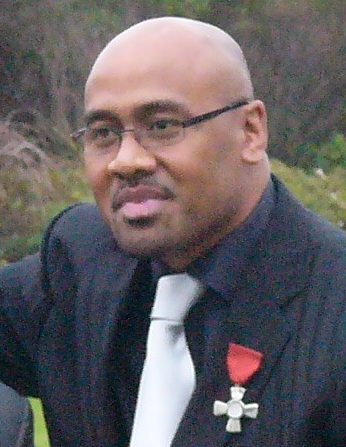
Jonah Lomu
12 May 1975 – 18 November 2015
Born in New Zealand to Tongan parents, Jonah Lomu became the youngest All Black ever in 1994, at just 19. At the 1995 Rugby World Cup in South Africa, he scored seven tries, including four against England in the semi-final, and became rugby’s first global superstar.
He played 63 matches for New Zealand and scored 37 tries, while fighting a serious kidney disease. He died in Auckland on 18 November 2015 of a heart attack linked to his kidney disease. He was 40.
Rest in peace, Jonah.
Hommage à Jonah Lomu (1975-2015), ailier des All Blacks né en Nouvelle-Zélande de parents tongiens, star de la Coupe du monde 1995, mort à 40 ans d’une crise cardiaque liée à sa maladie rénale. Il incarne la communauté pasifika (originaire des îles du Pacifique) et ouvre naturellement le voyage vers l’Océanie anglophone.
Why this film?
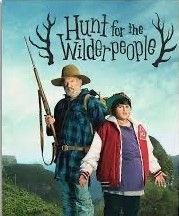
Hunt for the Wilderpeople (2016) is the biggest box-office success in the history of New Zealand cinema. It is funny, wild and sometimes very sad.
Ricky, a Māori boy in foster care, and Hec, a grumpy old man, run away into the bush. The whole country hunts them. The film helps us understand Aotearoa New Zealand: its landscapes, its two cultures (Māori and Pākehā), the Treaty of Waitangi, and how the State treats children.
The director, Taika Waititi, is Māori. He tells this story from the inside, with humour and with drama.
Pourquoi ce film ?
Hunt for the Wilderpeople (2016, titre français À la poursuite de Ricky Baker) est le plus grand succès commercial de l’histoire du cinéma néo-zélandais (hors coproductions). Il est drôle, sauvage et parfois très triste.
Ricky, un garçon māori placé en famille d’accueil, et Hec, un vieil homme bourru, s’enfuient dans le bush, la forêt indigène. Tout le pays les traque. Le film nous fait découvrir Aotearoa Nouvelle-Zélande : ses paysages, ses deux cultures (māori et pākehā), le traité de Waitangi et la façon dont l’État traite les enfants.
Le réalisateur, Taika Waititi, est māori. Il raconte cette histoire de l’intérieur, avec humour et avec gravité.
L’intérêt de ce film dans le programme
Œuvre de fiction drôle et accessible, le film mène à un objet d’étude central de Terminale : la place des peuples autochtones et la mémoire coloniale (axe 2 « Territoire et mémoire »). Il éclaire aussi la sphère privée face à l’État et aux médias (axe 1), la construction d’un récit national (axe 3) et la pluralité de l’anglais (axe 4). En voie professionnelle, il couvre les thèmes géographie et démographie, grandes œuvres, grands événements historiques, traditions et droits de l’enfant. Les mêmes tâches valent pour les deux voies ; seules les longueurs attendues varient.
Fil conducteur : élever le niveau sans effrayer les élèves. Ni contenu au rabais, ni exigences hors de portée : un contenu exigeant, rendu accessible par des étapes claires, des aides (banques de mots, modèles de réponses, enregistrements, trois niveaux B1, B1+ et B2) et une progression qui donne confiance.
| Activité langagière (CECRL) et compétence | Où dans la séquence |
|---|---|
| Compréhension de l’oral | Bande-annonce en deux visionnages (séance 4), accents néo-zélandais (séance 6), enregistrements |
| Compréhension de l’écrit | Documents de civilisation : carte, traité, protection de l’enfance (séances 1 à 3) |
| Expression écrite | Journal, article ou critique, de 100 à 200 mots selon le niveau (séance 7) |
| Expression orale en continu | Exposé de 4 à 5 minutes, entraînement à la situation B en bac pro (séance 8) |
| Interaction orale | Débat : audience devant le tribunal de la famille (séance 9) |
| Médiation | Expliquer les deux versions du traité de Waitangi (séance 2) |
| Compétences culturelles et interculturelles | Culture māori, Aotearoa Nouvelle-Zélande et Océanie anglophone, regards croisés entre pays du Commonwealth (Royaume-Uni, Australie, Nouvelle-Zélande) |
| Analyse filmique | Plans, chapitres, passage du rire au drame (séance 5) |
| Esprit critique et citoyenneté | Rumeur et médias, pouvoir de l’État, intérêt de l’enfant, réconciliation (séances 5 et 9) |
Why this film fits the programme
The film helps you study Indigenous peoples and memory (Terminale, axis 2), and also private life, the State and the media, national myths and the many forms of English. You will practise every skill: listening (the trailer, accents), reading (maps and history documents), writing (a diary, an article or a review), speaking (a talk of 4 to 5 minutes), debating (a court hearing) and mediation (the two texts of the Treaty). You will also analyse a film, think critically about the media and the State, and discuss citizenship.
Our idea: raise the level without scaring anyone. The content is demanding, but every step is clear, with help at each stage (word banks, model answers, recordings and three levels: B1, B1+ and B2), so that you can grow in confidence.
Ancrage dans les programmes
Voie générale et technologique · Terminale
Axe 2 « Territoire et mémoire », objet d’étude « Territoires autochtones : intégration, assimilation ou appropriation ? ». Les ressources d’accompagnement citent explicitement la colonisation de peuplement en Australasie et dans le Pacifique, et le traité de Waitangi comme mémoire de luttes inachevées.
Liens possibles : axe 1 « Espace privé et espace public » (« Dans quelle mesure la sphère privée peut-elle résister à l’intrusion de la sphère publique ? » : l’État, les médias et la famille), axe 3 « Fictions et réalités » (réalité et fantasme dans la construction d’un récit national : le mythe du bushman), axe 4 « Enjeux et formes de la communication » (objet « L’anglophonie, nouvelle Tour de Babel ? » : le māori en Nouvelle-Zélande, l’anglais néo-zélandais).
Voie professionnelle · Terminale bac pro
Thèmes du programme de langues vivantes : géographie et démographie (l’Océanie anglophone), grandes œuvres (le cinéma), grands événements historiques (le traité de 1840), traditions (la culture māori), grandes problématiques d’actualité (droits de l’enfant, droits humains) et engagement citoyen.
La séance 8 entraîne à la situation B de l’épreuve : présentation de 5 minutes environ suivie d’un échange.
Mêmes tâches pour les deux voies. Seules les longueurs attendues changent selon le niveau :
| Niveau visé | Pour qui | Écrit (séance 7) | Oral (séance 8) |
|---|---|---|---|
| B1 | LVB voie générale · LVB bac pro | 100 à 120 mots | 4 min, carte de mots-clés autorisée |
| B1+ | LVA bac pro | 120 à 150 mots | 4 à 5 min, quelques mots-clés |
| B2 | LVA voie générale | 180 à 200 mots | 5 min, sans notes rédigées |
Détail par voie (références officielles, tâche finale, évaluation, exigences, débuts de phrases) : onglets Lycée général et Lycée pro.
Sources : programme d’anglais du cycle terminal (BO 2025, annexe 4) et ressources Éduscol ; programmes de langues vivantes de la voie professionnelle (BO spécial n° 5 du 11 avril 2019).
The nine sessions
- 1 · The map → English-speaking Oceania
- 2 · A treaty, two texts → Waitangi, 1840 to today
- 3 · Before watching → the film, children in care
- 4 · The trailer → two viewings
- 5 · Film language → the dramatic scenes, the bushman myth
- 6 · Accents → Kiwi English, Māori English
- 7 · Writing → a diary, an article or a review
- 8 · Presenting → a talk of 4 to 5 minutes
- 9 · The debate → a Family Court hearing
Choose your pathway
The journey is the same for everyone. Your final task and the way you are assessed depend on your pathway.
The film
Also with Rachel House (Paula, the child welfare officer), Rhys Darby (Psycho Sam), Oscar Kightley (Andy, a police officer) and Tioreore Ngatai-Melbourne (Kahu).
En France : À la poursuite de Ricky Baker, en DVD et en VOD (plateformes variables selon la période ; vérifier avant la séance). Classement France : tout public. Royaume-Uni : 12A. États-Unis : PG-13.
Note d’information sur les moments sensibles (à titre informatif ; toutes ces scènes peuvent être étudiées, voir la séance 5) :
- Deuil : mort soudaine de Bella et enterrement (ch. 2).
- Chasse : sangliers tués au couteau ou par les chiens (ch. 1 et plus loin) ; le chien Zag, blessé, doit être abattu (hors champ, ch. 8).
- Rumeur d’abus : malentendu dans la cabane des chasseurs (ch. 5) ; Paula utilise l’étiquette « sex offender » pour faire pression sur Ricky.
- Armes, poursuite armée, allusions à la drogue sur le ton de la plaisanterie.
- Langage grossier (vocabulaire du registre familier néo-zélandais) et un geste obscène.
Si un élève est touché par les thèmes du placement, de la maltraitance ou du deuil : 119 (Allô Enfance en Danger, gratuit, 24 h/24) ; 3114 (numéro national de prévention du suicide, gratuit, 24 h/24). Prévenir l’infirmière ou le CPE si besoin.
Minutages des scènes : tous les minutages de la séquence sont approximatifs, à caler sur votre VOD ou votre DVD (ils varient selon les éditions).
Droits : la séquence n’intègre aucun extrait du film. Seule la bande-annonce officielle est intégrée (lecteur YouTube sans cookies). Les extraits se projettent à partir de votre support légal.
Your pathway · Voie générale et technologique · Terminale
Lycée général: read, compare, argue
Everyone follows the same journey: the map, Whina Cooper, the Treaty, the film, the accents and the country presentation. In the général pathway, you go one step further with documents: you compare them, you build an argument and you defend it in front of others.
Final task · général
A document synthesis, then an argued talk
Compare three English-language documents from the journey, which show three perspectives (the Crown and the United Kingdom, Māori, New Zealand today), and answer the question above:
- Document A: the two photos, Whina Cooper in 1975 and the Queen, head of the Commonwealth, at Waitangi in 1963 (Start);
- Document B: the English text of the Treaty and the English translation of the Māori text (session 2);
- Document C: one dramatic scene of the film (session 5).
Length: 200 to 250 words (B2, LVA) · 120 to 150 words (B1, LVB).
Speak for 5 minutes, then answer questions for 5 minutes (session 8). Take a clear position, use at least three documents, and show nuance: yes, but…
LVA (B2): no written notes, a plan on one card. LVB (B1): a card with key words.
Then, use your arguments in the Family Court debate (session 9).
How you will be assessed
- Your English marks in Première and Terminale count for the bac: this is contrôle continu (your report-card averages).
- At the end of Terminale, you get a language certificate (attestation de langues vivantes) with your level in listening, reading, writing and speaking (on your own and in conversation). The target is B2 in LVA and B1 in LVB.
- This final task trains you for the speaking format used in the official tests: about 5 minutes on documents, then a conversation in which you react, explain and defend your point of view.
The method: a synthesis in four steps
- Find the common theme. What do the three documents talk about? Who speaks? Who is silent? When?
- Group ideas, not documents. Never summarise A, then B, then C. Build two or three parts, with ideas from several documents in each part.
- Compare. Similarities, differences, points of view, dates, symbols.
- Answer the question with nuance. Give your opinion in the conclusion, and say what is still open.
A possible plan (open after you try)
Introduction: three documents, three periods (1840, 1963, 1975 and the film in 2016), one question: how do Māori and the Crown share the land and the memory?
I. Assimilation: British power and British culture. The English text of the Treaty speaks of “sovereignty”; the Queen visits Waitangi as Queen of New Zealand; in the film, the State decides where a Māori child belongs.
II. Resistance and appropriation. The Māori text speaks of kāwanatanga (governorship) and tino rangatiratanga (full chieftainship): power is shared, not given away. Whina Cooper wears a headscarf in the British style and a Māori feather cloak: she makes British culture her own, and she uses it to defend Māori land.
III. Integration today? Te reo Māori has been an official language since 1987; the Waitangi Tribunal has heard claims since 1975; a director of Māori descent makes the whole world laugh and think. But the debate on the Treaty and on children in care is not over.
Conclusion: not one answer but a tension: appropriation can be a way to survive and to resist.
B2 vocabulary
Power and history
sovereignty · governorship · chieftainship · the Crown · a treaty · to sign / to breach a treaty · settlers · colonisation · land confiscation · a claim · a grievance · redress · a settlement
Identity and culture
Indigenous · heritage · legacy · biculturalism · assimilation · integration · cultural appropriation · to reclaim · to revive a language · to pass on · pride · resilience
Memory and debate
to commemorate · a commemoration · a turning point · to acknowledge · to apologise · to uphold · to undermine · to raise awareness · a protest march · reconciliation
Sentence starters (B2)
Introduce and compare
- These three documents all deal with…
- Document A sheds light on…, whereas document B…
- Both… and… highlight…
- This echoes…
- In contrast to…, …
Argue and nuance
- It could be argued that…
- Admittedly…, yet…
- What strikes me is…
- This raises the question of whether…
- Far from…, …
Conclude and interact
- All things considered, …
- This is why I believe that…
- That’s a fair point, but…
- Could you clarify what you mean by…?
- I see it differently: …
Be ready for these questions
- Is cultural appropriation always negative?
- Can a nation have two founding texts?
- Is the Queen’s visit a sign of unity or of domination?
- Can a comedy help a country face its past?
- Is a treaty signed in 1840 still relevant for young New Zealanders today?
- Australia apologised to the Stolen Generations in 2008: what can Commonwealth countries learn from each other about their Indigenous peoples?
- Ka Mate, a haka by a Treaty signatory, is performed in rugby and used in adverts: tribute or commercialisation? (session 2)
A B2 talk: I can…
- ☐ state a clear question and a clear position;
- ☐ link at least three documents;
- ☐ give a counter-argument, then answer it;
- ☐ use precise words from the B2 list;
- ☐ speak without reading and react to questions.
Références officielles · voie générale et technologique
Programme : programme d’anglais pour les classes de lycée général et technologique, annexe 4 de l’arrêté du 5 mai 2025 (BO n° 22 du 29 mai 2025), en vigueur en première et en terminale depuis la rentrée 2026 (en seconde depuis la rentrée 2025).
Niveaux visés en fin de terminale : B2 en LVA, B1 en LVB, A2+ / B1 en LVC (fin de première : B1+ en LVA, B1 en LVB).
Axes de terminale : cinq axes sur six, dont l’axe 6 obligatoire (« Le Royaume-Uni et ses nations », que cette séquence ne remplace pas) ; en voie technologique, au moins trois axes. Ancrage principal : axe 2 « Territoire et mémoire », objets d’étude « Territoires autochtones : intégration, assimilation ou appropriation ? » et « Les commémorations au sein du Commonwealth ». Liens : axe 1 « Espace privé et espace public », axe 3 « Fictions et réalités » (le récit national), axe 4 « Enjeux et formes de la communication » (« L’anglophonie, nouvelle Tour de Babel ? »).
Activités langagières (préambule commun) : compréhension de l’oral et de l’écrit, expression orale en continu, expression écrite, interaction, médiation (le traité en deux langues, séance 2).
Évaluation : LVA et LVB en contrôle continu (moyennes annuelles de première et de terminale). Attestation de langues vivantes (note de service, BO n° 11 du 16 mars 2023) : niveau CECRL dans chaque activité (CO, EO en continu et en interaction, CE, EE), porté par les professeurs dans le livret scolaire en fin de terminale, sans épreuve supplémentaire. Candidats individuels : évaluation ponctuelle de terminale (BO n° 31 du 26 août 2021) avec un écrit d’1 h 30 (CO sur un document de 1 min 30 au plus, trois écoutes, compte rendu en français ; CE ; EE) et un oral de 10 min après 10 min de préparation (choix d’un axe parmi trois, 5 min au plus pour expliquer quel document ou quelle citation l’illustre le mieux, puis entretien). Voie technologique : l’ETLV fait l’objet d’un oral de 10 min (5 min de prise de parole, puis entretien).
Mise en œuvre : une séance de 55 min pour la synthèse (méthode, plan collectif, rédaction), puis l’exposé de la séance 8. Exigences propres à la voie générale : confrontation de documents, problématisation, concession et réfutation, lexique B2. En LVB, réduire à deux documents et accepter un plan en deux parties. Les débuts de phrases restent disponibles pour tous : l’ambition est la même, l’appui aussi.
Your pathway · Voie professionnelle · Terminale bac pro
Lycée pro: welcome, present, interact
Everyone follows the same journey: the map, Whina Cooper, the Treaty, the film, the accents and the country presentation. In the pro pathway, you use it at work: you welcome a visitor, you present your job and your project, you explain how things work and you react to questions.
Final task · pro
Present your project, then talk with a visitor
Present a piece of work you did in English during this journey: your country poster (session 1), your presentation of the film (session 8), or a link between your trade and New Zealand (see the table below). You can also present your work placement (PFMP).
Show a photo, a diagram or your poster. Key words are allowed, reading a text is not.
A visitor or a client from New Zealand (your teacher or a classmate) comes to your workplace: the kitchen, the shop, the workshop, the office or the care home. You welcome them, show them around, answer their questions about your job, and ask questions too.
Culture moment: at the end, the visitor asks: “What did you learn about Māori culture?” Explain respectfully one or two things you learnt in this journey: the pōwhiri (a Māori welcome ceremony, often on a marae, with speeches, songs and the hongi, pressing noses and foreheads), the haka Ka Mate and its composer Te Rauparaha, or the Treaty of Waitangi (session 2).
How you will be assessed
- In your final year, the bac pro English test takes place in class (CCF), in two independent parts.
- Situation A (written, 1 hour): listening, reading (you report in French what you understood) and writing.
- Situation B (oral, 10 minutes): up to 5 minutes on a project or a work experience of your choice, then up to 5 minutes of conversation.
- Expected level: B1+ in LVA, A2+ in LVB.
- This final task is a full rehearsal of situation B, and the project you prepare now can be the one you present on the day.
Link to your trade
| Your trade | Your project idea |
|---|---|
| Cooking, restaurant, hotel | Present a menu with New Zealand products (lamb, kiwifruit) and explain what a hāngī is: Māori food cooked slowly in an earth oven, on hot stones. Welcome a guest at the table. |
| Sales, customer service, reception | Welcome a New Zealand customer, present a product, deal with a request or a complaint, and say goodbye politely. |
| Office, administration | Book a video call with a partner in Auckland: check the time difference (New Zealand is one of the first countries to start each new day) and suggest two possible times. |
| Care, early childhood, social services | Ricky Baker is a child in care (session 3). Present the role of a care worker or of a children’s home where you did your placement, and compare with New Zealand. |
| Industry, maintenance, electricity | Explain the safety rules of your workshop to a visitor; describe a tool or a machine and how it works. |
| Building, wood | Compare a wharenui (a Māori meeting house in carved wood, session 3) with a building you worked on: materials, shapes, decoration. |
| Logistics, transport | Follow a shipment of kiwifruit from a New Zealand port to a client overseas: the steps, the documents, the checks. |
| Farming, landscape, environment | Hec lives in the bush. Present how New Zealand protects its native forests (the Department of Conservation) and compare with your work outdoors. |
Sentence starters
Welcome and present
- Kia ora, and welcome to…
- My name is…, I’m training to be a…
- During my work placement at…, I…
- My role in the team is to…
- Let me show you…
Explain
- First, you… Then… Finally, …
- This tool / product is used to…
- For safety reasons, you must… / you mustn’t…
- The project I want to present is…
- What I learned is…
Interact and mediate
- Could you repeat that, please?
- Do you mean that…?
- Would you like…?
- Is there anything else I can do for you?
- One thing I learnt about Māori culture is…
- In a pōwhiri, the visitors…
Work vocabulary (A2+ to B1+)
People and places
a colleague · a manager · a tutor · a customer · a supplier · a trainee · the team · the workshop · the kitchen · the shop floor · the office
Tasks
to welcome · to deal with · to book · to order · to deliver · to check · to repair · to clean · to look after · a shift · a schedule · a task
Rules and quality
safety rules · protective equipment · gloves · goggles · hygiene · a procedure · a complaint · customer satisfaction · on time · carefully
The visitor’s questions
- What do you do in your job?
- What did you learn during your work placement?
- What is the most difficult part of your job?
- Why did you choose this project?
- What would you show me first in your workplace?
- Would you like to work abroad one day, maybe in New Zealand?
- What did you learn about Māori culture?
Situation B: I can…
- ☐ welcome someone politely and introduce myself;
- ☐ present my project for 5 minutes with a visual;
- ☐ explain a task or a procedure step by step;
- ☐ ask for repetition and check that I understand;
- ☐ make a link between my trade and New Zealand;
- ☐ explain respectfully one thing I learnt about Māori culture.
Références officielles · voie professionnelle
Programme : programme de langues vivantes des classes préparant au CAP et au baccalauréat professionnel (BO spécial n° 5 du 11 avril 2019). Deux dimensions : la langue dans les situations de la vie quotidienne, sociale et citoyenne, et dans les situations et les actes de la vie professionnelle. Thèmes mobilisés : géographie et démographie, emblèmes, drapeaux et hymnes, grands événements historiques, traditions, grandes œuvres (le cinéma). Activités : réception, production, interaction et médiation (tableaux de descripteurs du programme).
Niveaux : attendus à l’examen, B1+ en LVA et A2+ en LVB ; visés en fin d’études secondaires, B2 en LVA et B1 en LVB (le programme distingue bien les deux). CAP : A2.
Tâches professionnelles du programme travaillées ici : accueillir les partenaires (clients, usagers, fournisseurs) ; décrire brièvement son activité professionnelle et présenter son rôle au sein d’une équipe ; expliquer comment marche un matériel ; présenter une entreprise ou un service ; exposer ses expériences et ses compétences.
Évaluation : arrêté du 17 juin 2020 (annexe V), en CCF en terminale. Situation A, écrit d’1 h : CO (document d’1 min 30 au plus, trois écoutes, compte rendu en français), CE (compte rendu en français), EE. Situation B, oral individuel de 10 min : partie 1, prise de parole en continu de 5 min au plus sur un sujet choisi par le candidat (un travail, un projet, un produit ou un service réalisé dans le cadre des enseignements et ayant fait appel à la langue, ou une expérience professionnelle, en France ou en mobilité) ; lecture d’un texte rédigé in extenso exclue, plan et mots-clés autorisés, support iconographique possible ; partie 2, interaction de 5 min au plus. Les deux situations sont indépendantes. Hors CCF : épreuve ponctuelle d’1 h 10.
Calendrier : depuis la rentrée 2026, la terminale comporte deux semaines d’accompagnement personnalisé avant la mi-mars (deux semaines de PFMP supplémentaires gratifiées par l’État, ou deux semaines de préparation à la poursuite d’études), qui remplacent le « parcours différencié » de fin d’année (6 semaines en 2024-2025, 4 semaines en 2025-2026). Les épreuves écrites du bac professionnel ont lieu début juin à partir de la session 2027 (français : mardi 8 juin 2027, 8 h-11 h). Programmer les CCF en tenant compte de ce calendrier.
Avec l’enseignement professionnel : idées de projet mené avec l’enseignant de spécialité, si l’établissement le permet : préparer ensemble la partie 1 de la situation B à partir de la PFMP (photos et documents rapportés avec l’accord du tuteur) ; jeu de rôle d’accueil sur le plateau technique, en cuisine ou au magasin pédagogique ; consignes de sécurité rédigées en anglais ; version anglaise d’une étape de la réalisation d’un projet.
Mise en œuvre : exigences propres à la voie pro : interaction pratique, reformulation, consignes claires, lien avec le métier ; la culture (Whina Cooper, le traité, le film, le pōwhiri) reste au même niveau d’ambition. En LVB (A2+), réduire la partie 1 à 3 min et fournir les questions du visiteur à l’avance. Les débuts de phrases sont obligatoires lors du premier essai : ils sécurisent la prise de parole.
Session 1 · Getting started
English-speaking Oceania
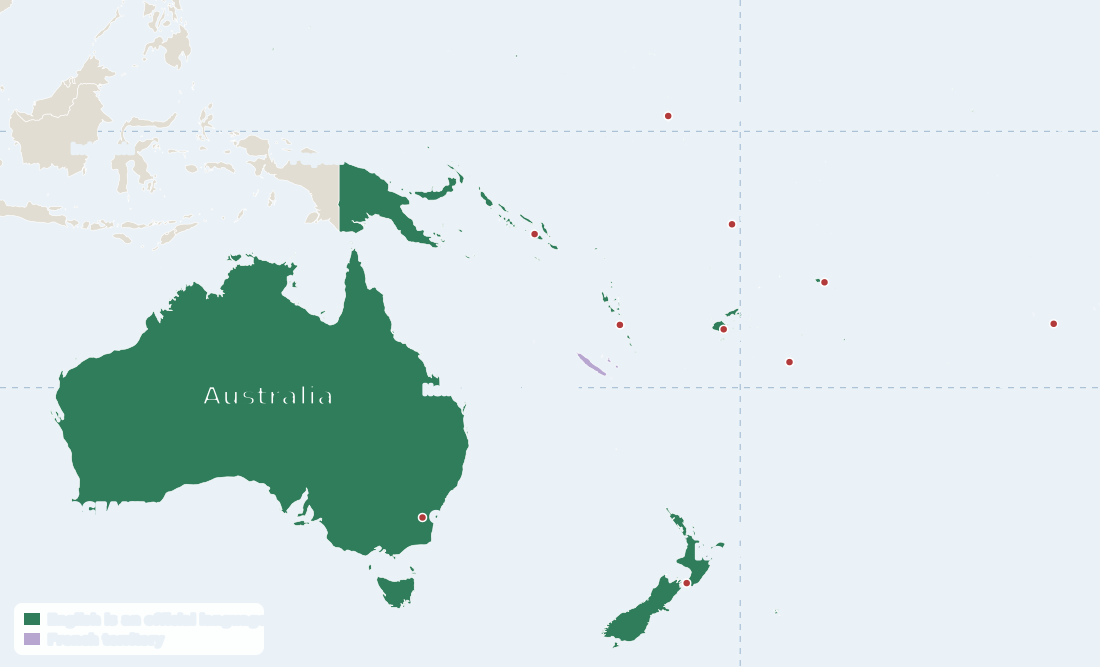
Map drawn for this lesson from Natural Earth data (public domain). Small island nations are shown by a red dot.
Warm-up: look at the map
In pairs, describe the map in English. Use: in the north / south / east / west of…, between… and…, close to…, far from…, on the other side of…
Which is the biggest English-speaking country on this map? Which countries are small islands? Why do so many countries in this region speak English?
Sentence starters: The biggest country is… because… · …, … and … are small islands: they are shown by a red dot. · Many of these countries speak English because…
Where is it?
Choose the right country for each clue. Use the map.
Choose from: Australia · New Zealand · Papua New Guinea · Solomon Islands · Vanuatu · Fiji · Tuvalu · Samoa · Tonga · Kiribati
English-speaking Oceania
Computer voice: Emma (British English).
Transcript
Oceania is a huge region of ocean and islands in the South Pacific. Two big countries dominate it: Australia, a whole continent, and Aotearoa New Zealand, two main islands and many small ones. Around them, there are many small island nations: Papua New Guinea, the Solomon Islands, Vanuatu, Fiji, Tuvalu, Samoa, Tonga and Kiribati. In all these countries, English is an official language, often next to one or more local languages. Why English? Because Britain colonised Australia from 1788 and New Zealand from 1840, and later ran or influenced many Pacific islands. Today, all ten countries on our map are members of the Commonwealth. But English is not the only story. In New Zealand, te reo Māori has been an official language since 1987. In the 2023 census, almost one New Zealander in five said they had Māori ancestors. And for small islands like Tuvalu, the big issue today is climate change: rising seas threaten their land. In 2024, a treaty with Australia, the Falepili Union, came into force: it opens a path for some Tuvaluans to move to Australia.
Why English here?
1788 → The First Fleet arrives from Britain: the colonisation of Australia begins.
1840 → The Treaty of Waitangi: New Zealand becomes a British colony (session 2).
1901 → The six Australian colonies unite: the Commonwealth of Australia is born.
1915 → Australian and New Zealand soldiers (the ANZACs) land at Gallipoli on 25 April.
1987 → Te reo Māori becomes an official language of New Zealand.
2008 → Australia’s Prime Minister apologises to the Stolen Generations (13 February).
2023 → Australians vote No (60%) to an Indigenous Voice to Parliament.
2024 → The Falepili Union between Australia and Tuvalu comes into force; Samoa hosts the Commonwealth summit.
Speaking task · in pairs · 1 to 2 minutes per country
Present a country
Make a poster in five panels, like a real pupil poster. First, you present New Zealand. Then you present one Commonwealth country of your choice, with the same five panels. Look at the model, listen to it, then prepare your own.
The five sentence starters (you must use all of them)
- X is located in…
- Its capital is…
- The flag has…
- Its population is about…
- One thing I want you to remember is…
The model: New Zealand · Aotearoa
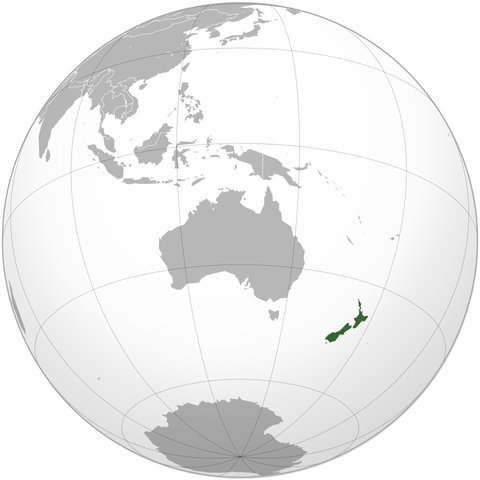



Location
New Zealand is located in the south-west Pacific Ocean, about 2,000 km south-east of Australia, across the Tasman Sea. It has two main islands: the North Island (Te Ika-a-Māui) and the South Island (Te Waipounamu).
Capital
Its capital is Wellington, at the southern end of the North Island. The biggest city is Auckland, in the north.
Flag
The flag has a dark blue background, the Union Jack in the top left corner and four red stars with white borders. The stars show the Southern Cross, a group of stars you can see in the southern sky. In 2016, New Zealanders voted to keep this flag.
Population
Its population is about 5.4 million people (Stats NZ, June 2026). About one in three New Zealanders lives in the Auckland region (1.8 million people). Almost 18% of New Zealanders identify as Māori (2023 census).
One thing I want you to remember
One thing I want you to remember is that in 1893, New Zealand became the first self-governing country in the world where all women could vote in national elections.
Sources: Stats NZ, “Population of New Zealand” (5,357,300 people at 30 June 2026, provisional estimate published on 18 August 2026) · Stats NZ, 2023 Census counts · NZHistory, “Women win the right to vote” · Electoral Commission, 2016 flag referendum result
Model · Present a country: New Zealand (about 1 minute)
Computer voice: Isabella (British English).
Transcript
Hello everyone. Today, I’m going to present New Zealand, or Aotearoa. New Zealand is located in the south-west Pacific Ocean, about 2,000 km south-east of Australia, across the Tasman Sea. It has two main islands: the North Island, Te Ika-a-Māui, and the South Island, Te Waipounamu. Its capital is Wellington, at the southern end of the North Island. The biggest city is Auckland, in the north. The flag has a dark blue background, the Union Jack in the top left corner and four red stars with white borders. The stars show the Southern Cross. In 2016, New Zealanders voted to keep this flag. Its population is about 5.4 million people. About one in three New Zealanders lives in the Auckland region. Almost 18% of New Zealanders identify as Māori. One thing I want you to remember is that in 1893, New Zealand became the first self-governing country in the world where all women could vote in national elections. Thank you for listening. Do you have any questions?
Your turn: your Commonwealth country
Choose one country from the Commonwealth (56 member countries). For example:
AustraliaFijiSamoaTongaPapua New GuineaCanadaJamaicaIndiaSouth AfricaKenyaNigeriaGhanaRwandaMaltaSingaporeMalaysia
Where to find your facts: the Commonwealth website (member countries), the country’s official statistics office for the population, and Wikimedia Commons for a free flag picture.
My poster: ____________
________ is located in …
Its capital is …
The flag has …
Its population is about …
One thing I want you to remember is …
Step by step
- Listen to the model and read it once.
- Prepare your country: one short fact per panel, a flag and a map. Write key words only, not full sentences.
- Pair work, round 1: A presents New Zealand, B listens and ticks the five starters. Then swap.
- Pair work, round 2: A presents their Commonwealth country, B asks one question. Then swap.
- Volunteers present their country to the class.
Useful words
Big numbers: 5.4 million = five point four million · 2,000 = two thousand · about, almost, more than
Flags: a stripe, a star, a cross, a circle, a crescent, a leaf, the background, in the top left corner, in the middle, on the left / right
Location: in the north / south / east / west of…, between… and…, an island, a continent, the ocean, the coast
Questions the listener can ask
- Why did you choose this country?
- What language do people speak there?
- Is it bigger or smaller than New Zealand?
- Would you like to go there? Why?
I can…
- ☐ say where a country is located;
- ☐ give its capital;
- ☐ describe its flag (colours, shapes, symbols);
- ☐ say a big number correctly;
- ☐ say one thing I want the class to remember;
- ☐ speak for one minute while looking at my partner, with key words only.
More ambitious? Add a comparison: Like New Zealand, … / Unlike New Zealand, …, and explain why your fact is important: …because…
« Present a country » : déroulé et intentions
Pourquoi ici : l’activité clôt la séance 1. Les élèves viennent de voir la carte, les chiffres et la frise : ils ont donc déjà de quoi parler. C’est la première prise de parole de la séquence, courte et très guidée (1 à 2 min). Elle prépare le chemin vers l’exposé de 4 à 5 min de la séance 8. Elle relie aussi la Nouvelle-Zélande au reste du Commonwealth avant la séance 2 sur le traité. Le format s’inspire d’une affiche d’élève (Grèce et France : Location, Capital, Flag, Population, avec une carte, un drapeau et un fait court par rubrique).
Timing (environ 35 min) : 5 min d’écoute et de lecture du modèle → 15 min de préparation du pays choisi (mots-clés, drapeau, carte) → 10 min d’oral en binôme, en deux tours (Nouvelle-Zélande, puis pays choisi), les rôles A et B s’inversant → 5 min de passages volontaires. Si la séance de 55 min est déjà pleine, la préparation du pays choisi peut se faire à la maison et les passages au début de la séance 2.
Oral en binôme : tous les élèves parlent en même temps, à voix basse, devant un seul camarade. L’exposition est faible, le temps de parole est maximal, et personne n’est mis en difficulté devant la classe. Le passage devant le groupe reste volontaire.
Débuts de phrases obligatoires : ce sont des appuis. Avec eux, chaque élève peut produire au moins cinq phrases justes et ose prendre la parole, même les plus fragiles. L’élève qui écoute coche les cinq débuts de phrases, ce qui lui donne une tâche d’écoute précise.
Pédagogie de la réussite : la réussite est atteignable par tous dès la première séance (cinq phrases, un fait par rubrique). On valorise ce qui est réussi avec la liste « I can… » avant de corriger. On n’évalue pas cette première prise de parole, ou alors seulement de façon positive. Différenciation vers le haut : comparaison (Like… / Unlike…) et justification (because) pour les élèves de niveau B1+ et B2.
Programmes : voie générale, rappel de l’axe 6 de seconde « Les pays du Commonwealth : héritages, unité, diversité » (BO n° 22 du 29 mai 2025, annexe 4) ; voie professionnelle, thèmes « géographie et démographie » et « emblèmes, drapeaux, hymnes » (BO spécial n° 5 du 11 avril 2019).
Faits vérifiés en octobre 2026 : population de 5 357 300 habitants au 30 juin 2026 (Stats NZ, estimation provisoire publiée le 18 août 2026) ; 17,8 % de Néo-Zélandais se déclarant māori (recensement 2023) ; droit de vote des femmes le 19 septembre 1893 (NZHistory) ; drapeau conservé lors du second référendum de mars 2016 (56,6 %, Electoral Commission). Région d’Auckland : 1 816 000 habitants au 30 juin 2025 (Stats NZ, estimations infranationales provisoires), soit environ un Néo-Zélandais sur trois. Images : drapeau, domaine public ; carte, Connormah, CC BY-SA 3.0 (Wikimedia Commons). Le Commonwealth compte 56 pays membres.
Durée conseillée : 55 min, ou un peu plus avec l’activité « Present a country » (voir la note ci-dessus). Lien avec la séquence Commonwealth (les dix pays de la carte sont membres du Commonwealth). Prolongement possible en voie pro (géographie et démographie) : comparer deux pays à partir des chiffres de recensement.
Sources : Stats NZ, recensement 2023 ; Australian Bureau of Statistics, recensement 2021 ; traité Falepili en vigueur le 28 août 2024 ; CHOGM d’Apia, 21 au 26 octobre 2024.
Session 2 · Territory and memory
A treaty, two texts
Emblematic figure · Aotearoa New Zealand
Dame Whina Cooper
9 December 1895 → 26 March 1994
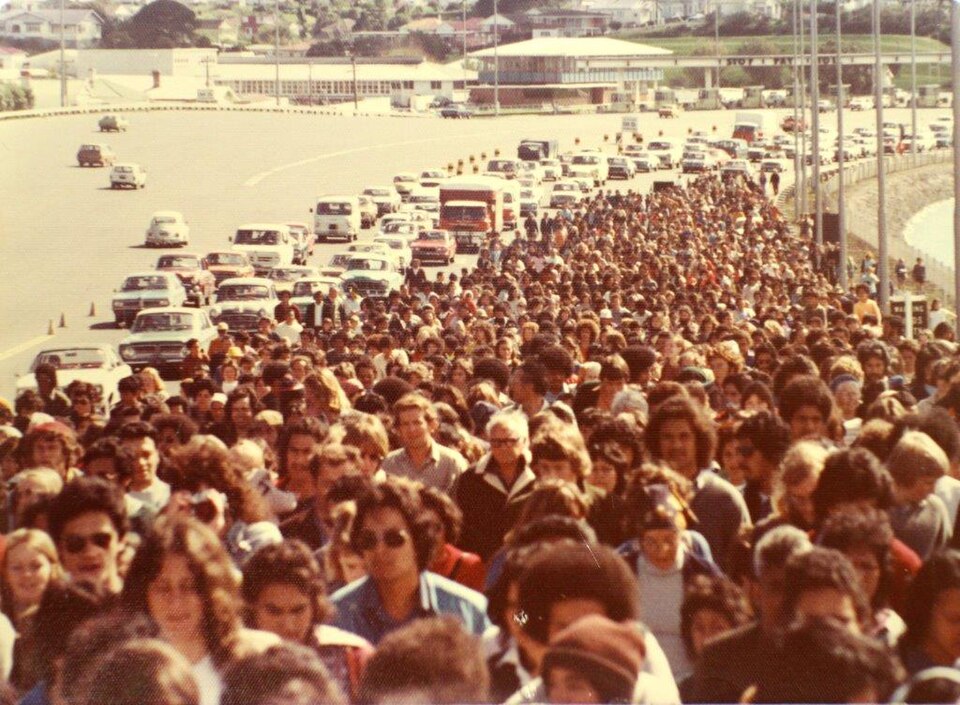

“Let us all remember that the Treaty was signed so that we could all live as one nation in Aotearoa.”Dame Whina Cooper’s message at the opening of the Commonwealth Games in Auckland, January 1990, a message she repeated again and again in the last years of her life (source: Te Ara).
Whina Cooper (1895–1994) was a leader of the Te Rarawa people, from the far north of New Zealand. In 1975, at the age of 79, she led the Māori Land March, a hīkoi (a long protest walk) from Te Hāpua, in the far north of the North Island, to Parliament in Wellington, about 1,100 km away.
Only about 50 marchers left Te Hāpua on 14 September, but around 5,000 people reached Parliament in October, behind the slogan “Not one more acre of Māori land”. There, Whina Cooper gave the Prime Minister, Bill Rowling, a petition signed by 60,000 people.
She became Dame Whina Cooper in 1981, and in 1991 she joined the Order of New Zealand, the highest honour in the country.
Sources: Michael King, “Cooper, Whina”, Dictionary of New Zealand Biography, Te Ara (2000) · NZHistory, “1975: key events” · Te Ara, “Māori protest movements”
Read and answer
Answer in full sentences.
1. Where did the march start, and where did it end?
2. How many people left Te Hāpua, and how many reached Parliament?
3. In your own words, what did the slogan “Not one more acre of Māori land” mean?
Whina Cooper (1895-1994) était une cheffe du peuple te rarawa, dans l’extrême nord de la Nouvelle-Zélande. En 1975, à 79 ans, elle a pris la tête de la marche māori pour la terre, une hīkoi (une longue marche de protestation) partie de Te Hāpua, tout au nord de l’île du Nord, jusqu’au Parlement de Wellington, à environ 1 100 km.
Une cinquantaine de marcheurs seulement ont quitté Te Hāpua le 14 septembre, mais environ 5 000 personnes sont arrivées au Parlement en octobre, derrière le slogan « Pas un acre de plus de terre māori ». Whina Cooper a alors remis au Premier ministre, Bill Rowling, une pétition signée par 60 000 personnes.
Elle a été faite Dame en 1981, puis membre de l’ordre de Nouvelle-Zélande, la plus haute distinction du pays, en 1991.
Citation : « Souvenons-nous tous que le traité a été signé pour que nous puissions tous vivre comme une seule nation en Aotearoa. »
Pourquoi Whina Cooper ouvre cette séance : la séance s’intitule « Territory and memory » et Whina Cooper incarne les deux. La marche de 1975 porte sur la terre (refus de toute nouvelle aliénation des terres māori) et elle est devenue un lieu de mémoire : c’est l’année de la création du Tribunal de Waitangi (voir la frise plus bas), et la hīkoi de 2024 a repris la même forme de protestation. Sa phrase sur le traité fait le lien direct avec le document étudié ensuite : deux textes, deux lectures, une seule nation à construire.
Prolongement cinéma : le film Whina (James Napier Robertson et Paula Whetu Jones, sorti en Nouvelle-Zélande le 23 juin 2022), avec Rena Owen, Miriama McDowell et Tioreore Ngatai-Melbourne dans le rôle de Whina à différents âges. Il alterne sa vie et la marche de 1975 ; on peut en montrer la bande-annonce pour faire le pont avec le film étudié.
Repères vérifiés (octobre 2026) : née le 9 décembre 1895, morte le 26 mars 1994 ; 79 ans pendant la marche (« dans sa 80e année » selon Te Ara) ; départ de Te Hāpua le 14 septembre 1975 avec environ 50 marcheurs ; environ 1 100 km (NZHistory, Archives New Zealand) ; arrivée en octobre avec environ 5 000 personnes ; pétition de 60 000 signatures et « memorial of rights » de 200 aînés māori remis à Bill Rowling ; DBE en 1981, ordre de Nouvelle-Zélande en 1991. Corrigé des questions : voir le bouton « Answers ».

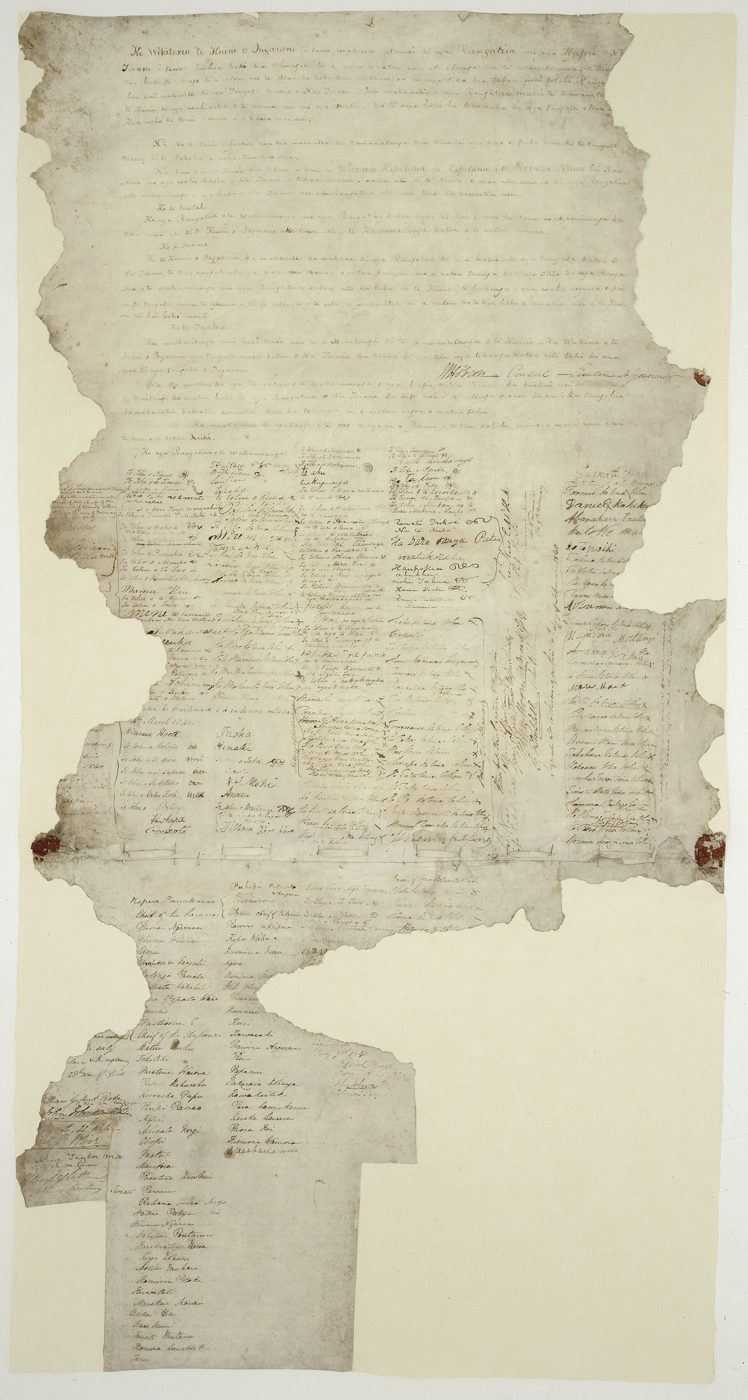

Before listening
A treaty is an agreement between two peoples or two countries. What can go wrong when a treaty is written in two languages?
A treaty, two texts
Computer voice: George (British English).
Transcript
On the sixth of February 1840, at Waitangi, in the north of New Zealand, British officials and Māori chiefs, called rangatira, signed a treaty. In the following months, around five hundred and forty rangatira signed it. But there were two texts: one in English, and one in te reo Māori. And they do not say the same thing. In the English text, the chiefs give the Queen sovereignty: full power over the country. In the Māori text, they give the Crown kāwanatanga, which means governorship, the right to govern. And the Māori text promises them tino rangatiratanga: full authority over their lands, their villages and their treasures. So, for many Māori, they never gave away their power. They only shared it. This difference is the heart of a debate that is still alive today. In 1975, New Zealand created the Waitangi Tribunal, to listen to Māori claims when the Crown breaks the promises of the Treaty.
| English text | Māori text (Te Tiriti) | |
|---|---|---|
| What the chiefs give | sovereignty: full power over the country | kāwanatanga: governorship, the right to govern |
| What the chiefs keep | possession of their lands, forests and fisheries | tino rangatiratanga: full authority over their lands, villages and treasures (taonga) |
| What it means for many Māori | Power was shared, not given away. | |
Two texts, two meanings
Complete with the right word.
Choose from: sovereignty · kāwanatanga · tino rangatiratanga · rangatira · the Waitangi Tribunal
Memory: the struggle continues
From the Land March to the hīkoi
Computer voice: Isabella (British English).
Transcript
In September 1975, about fifty people left Te Hāpua, at the very top of the North Island. They walked about eleven hundred kilometres to Wellington, the capital. When they arrived at Parliament, in October, they were around five thousand. Their message was simple: not one more acre of Māori land must be lost. Almost fifty years later, in November 2024, around forty-two thousand people marched to Parliament again. This hīkoi was against a bill that wanted to redefine the principles of the Treaty. On the tenth of April 2025, Parliament voted the bill down, by one hundred and twelve votes to eleven. But two days earlier, on the eighth of April, Parliament had removed a section of the law on child welfare, section 7AA, that obliged the children’s ministry to respect the Treaty in a specific way. So, the story is not simple. There are victories and setbacks. Reconciliation is still unfinished.
True or false?
Listen to the recording, then choose.
Choose from: True · False
1840 → Te Tiriti o Waitangi, 6 February.
1975 → The Land March reaches Parliament (October); creation of the Waitangi Tribunal.
1987 → Māori Language Act: te reo Māori becomes an official language.
2014 → Te Urewera, a forest, is recognised as a legal person.
2014 → The Haka Ka Mate Attribution Act: Te Rauparaha must be named as the composer of Ka Mate (see below).
2017 → The Whanganui River is recognised as a legal person.
2024 → Hīkoi mō te Tiriti: about 42,000 people march to Parliament (19 November).
2025 → The Treaty Principles Bill is defeated, 112 votes to 11 (10 April). Two days before, section 7AA of the child welfare law is repealed (8 April).
Living memory · 15 min
Ka Mate: a haka by a Treaty signatory
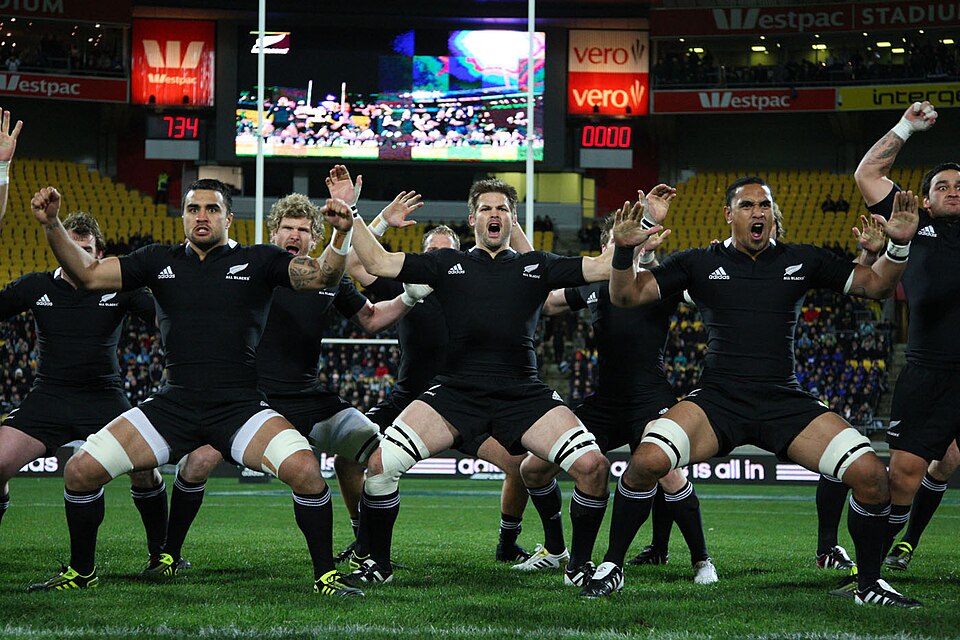

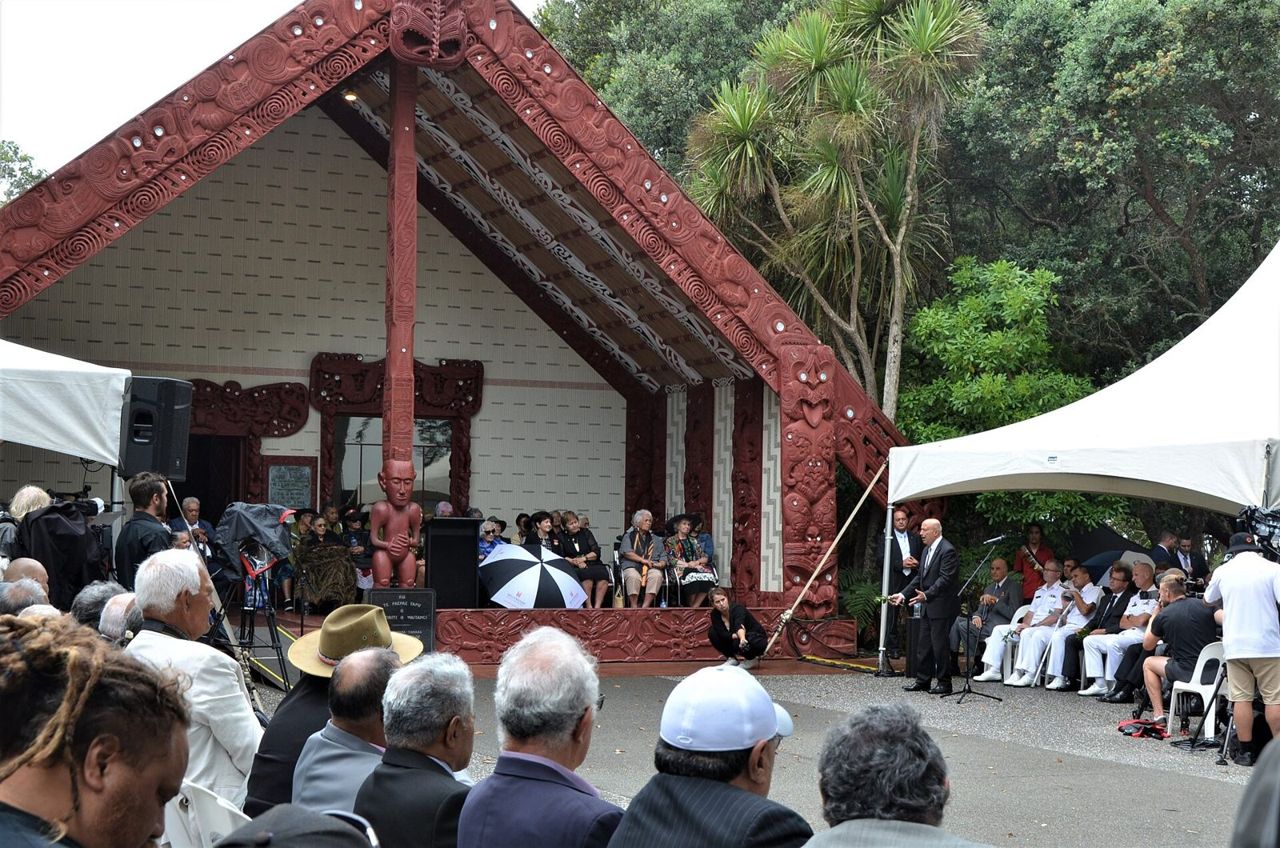
A haka is not only a war dance. It is a Māori dance with chanted words, stamping feet and strong faces. Māori perform haka to welcome guests, to mourn the dead, to celebrate and to show who they are.
The most famous haka, Ka Mate, was composed around 1820 by Te Rauparaha, a chief of Ngāti Toa. Chased by enemies, he hid in a food pit, protected by another chief and his wife. Its first words, “Ka mate! Ka mate! Ka ora! Ka ora!”, mean “It is death! It is death! It is life! It is life!”. In 1840, Te Rauparaha signed the Treaty of Waitangi, twice.
New Zealand rugby teams have performed haka since the 1880s, and the All Blacks made Ka Mate famous all over the world. But who does it belong to? In 2014, as part of a Treaty settlement, a law said that Te Rauparaha must be named as the composer when Ka Mate is used in adverts, on TV or in films. Ngāti Toa cannot ask for money: they ask for respect.
In November 2015, at the memorial for Jonah Lomu (In Loving Memory), his old school and former All Blacks performed a haka to say goodbye.
Look and speak (in pairs, 2 to 3 minutes each): use the ten starters in order, from describing to connecting. They build your answer step by step.
1 · Describe A2
- In the photo, I can see…
- The players are…
2 · Explain A2+
- The haka is not just…
- It is used to…
- Ka Mate was composed by…
3 · Give an opinion B1
- I think it is respectful when…
- In my opinion, it is a problem when…
4 · Connect B1
- It reminds me of…
- It is linked to the Treaty because…
- Jonah Lomu’s farewell shows that…
Useful words: to stamp · to chant · to slap your thighs · wide eyes · a challenge · to welcome · to mourn · pride · respect · an advert · to make money from
Mediation
An exchange student from London, who has never heard of New Zealand history, asks you: “What is the Treaty of Waitangi, and why do people still talk about it?” Explain in English in five or six sentences, using the two texts of the Treaty and the timeline. Then your partner, as the student, asks you one more question.
Durée conseillée : 55 min. C’est le cœur de l’ancrage dans l’axe 2 (« mémoire de luttes inachevées », d’après les ressources Éduscol). Garder la nuance : avancées (Tribunal de Waitangi, langue officielle, personnalité juridique de Te Urewera et du Whanganui, rejet du projet de loi en 2025) et reculs (abrogation de la section 7AA le 8 avril 2025).
Le haka Ka Mate (15 min) : il a toute sa place ici, car son auteur, Te Rauparaha, a signé le traité deux fois, et la loi de 2014 qui protège son nom fait partie d’un règlement au titre du traité. On reste dans l’axe « Territoire et mémoire » : à qui appartient une culture ? Déroulé : 2 min d’observation de la photo en silence, 5 min de lecture, 6 min d’oral en binôme avec les dix débuts de phrases obligatoires, du A2 (décrire) au B1 (donner son avis, relier au traité et à Jonah Lomu) ; les élèves fragiles peuvent s’arrêter au groupe 2, les plus avancés développent les groupes 3 et 4, 2 min de mise en commun.
Respect culturel : on observe, on décrit et on discute ; on ne fait pas exécuter le haka en classe et on ne le mime jamais pour plaisanter (ni les gestes, ni les grimaces, ni la langue tirée). Le dire simplement avant de montrer la photo : « We watch it, we don’t copy it. » Classe sereine : si des rires éclatent, ne pas sanctionner à chaud ; rappeler le haka d’adieu à Jonah Lomu et laisser un temps de silence. Le débat porte sur les usages commerciaux, jamais sur les élèves.
Faits vérifiés : Haka Ka Mate Attribution Act 2014 (objet : mettre en œuvre le règlement des revendications historiques de Ngāti Toa Rangatira ; Ka Mate composé vers 1820 ; droit d’attribution, sans redevance) ; Te Rauparaha signataire le 14 mai 1840 à Kāpiti et le 19 juin 1840 au large de Mana Island (NZHistory, Te Ara) ; types de haka (Te Ara, « Traditional Māori songs ») ; mémorial de Jonah Lomu à Eden Park le 30 novembre 2015, haka de Wesley College et d’anciens All Blacks (RNZ, BBC). Pas de vidéo intégrée, pour garder l’activité courte.
Repères : 6 février 1840, environ 540 rangatira signataires ; marche de 1975 partie de Te Hāpua le 14 septembre avec une cinquantaine de marcheurs, environ 5 000 à l’arrivée, environ 1 100 km ; hīkoi du 19 novembre 2024, environ 42 000 personnes.
Session 3 · Anticipation
Before watching
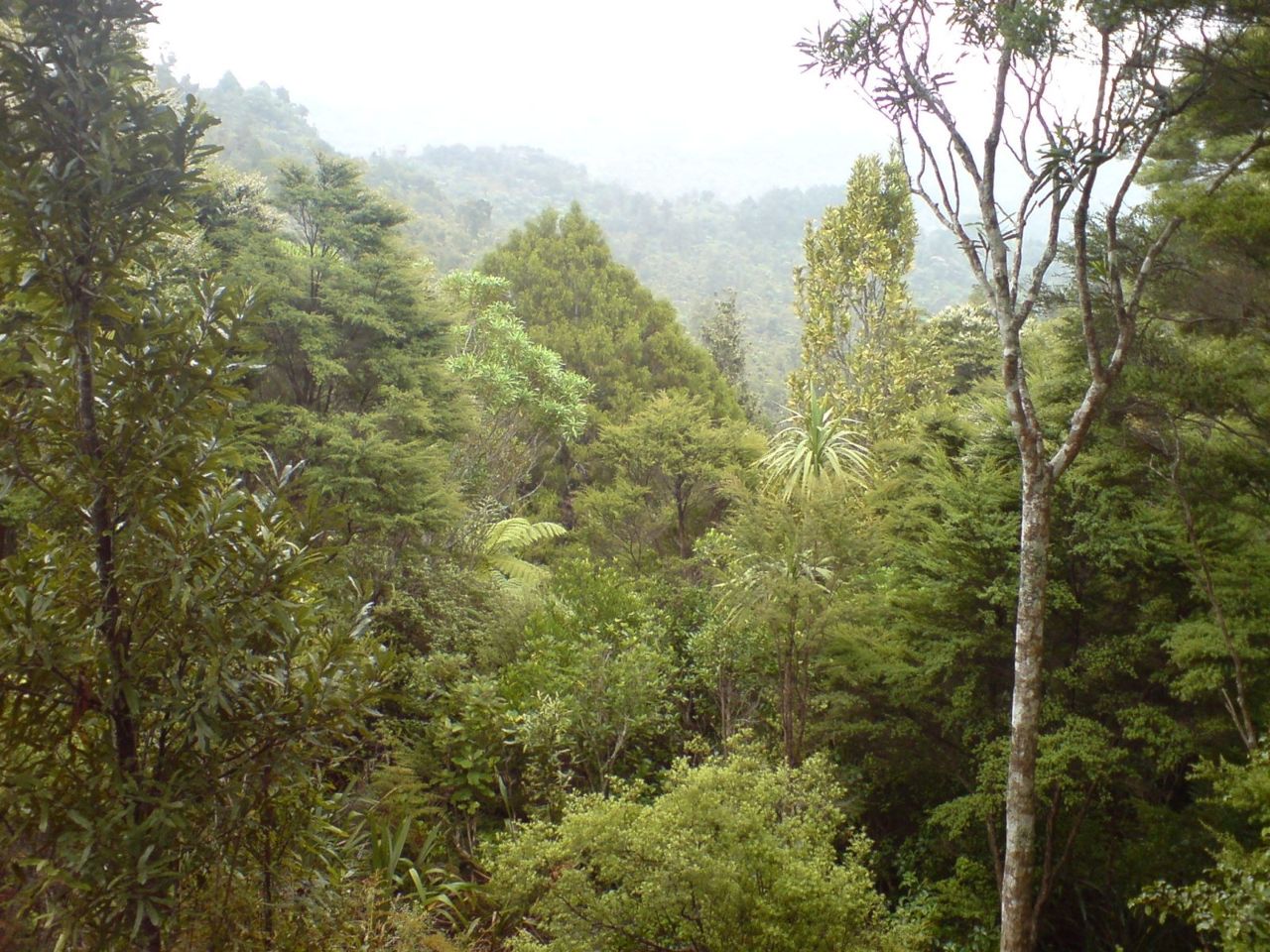
Look at the title
Hunt for the Wilderpeople. What is a hunt? Who could the “wilderpeople” be? Make three guesses about the story.
Describe the picture

Before you watch the film, look at this picture. What can you see? Where are they going?
- In the foreground / in the background, I can see…
- There is an old man, a boy and…
- They are walking… They are carrying…
- We can only see their backs, so…
- I think they are going to… because…
- Maybe they are running away from…
Activité de description (5 min) juste avant d’aborder le film : l’image annonce le duo Hec et Ricky et la fuite dans le bush, sans rien dévoiler. Faire formuler des hypothèses (might, must, maybe), puis les vérifier avec la piste audio sur le film et la bande-annonce (séance 4).

Key words
Match each word with its meaning.
Choose from: a family that looks after a child who is not theirs · a large search to catch someone · the native forest · deep sadness after a death · to feel at home in a place or group
Meet the film
Computer voice: Lewis (British English).
Transcript
Hunt for the Wilderpeople is a New Zealand film from 2016, directed by Taika Waititi. It is based on a novel by Barry Crump, a famous New Zealand writer of bush stories. Ricky Baker is a city boy, barely a teenager. He has been in foster care for years, and the child welfare services say he is a real bad egg. He is sent to a farm on the edge of the bush, to live with Bella, who is warm and funny, and her husband Hec, who is grumpy and silent. Then something terrible happens, and Ricky runs away into the bush. Hec follows him. Soon, the whole country thinks that the old man has kidnapped the boy, and a national manhunt begins. The film is a comedy and an adventure, but it also talks about grief, about belonging, and about who has the right to decide where a child should live. Taika Waititi is Māori on his father’s side. In 2020, he became the first Indigenous person to win an Oscar for screenwriting.
Meet the film
Listen, then choose.
The real background: children in care
Children in care in New Zealand
Computer voice: Emma (British English).
Transcript
In New Zealand, the ministry for children is called Oranga Tamariki. It was created in 2017. When a family cannot look after a child, the State can place the child in foster care. Māori children are much more likely to be taken into care. In recent years, about two children in care out of three were Māori, although Māori are less than one fifth of the population. In July 2024, a Royal Commission published a huge report. It said that up to two hundred thousand people were abused in State and religious care between 1950 and 2019. In November 2024, the Prime Minister made a formal apology in Parliament. For many Māori families, the solution is to keep children within their whānau, their extended family, and connected to their culture. This is the background of Ricky’s story: a Māori boy, moved from home to home by the system.
Children in care
Listen, then choose.
Speak: your expectations
With what you know now, what do you expect from the film? A comedy, a drama, an adventure? Use: I expect…, I guess…, It might be…, I wonder whether…
Durée conseillée : 55 min. Lien voie pro : thème « droits de l’enfant ». Lien axe 1 : l’État et la sphère privée.
Sources : rapport Whanaketia de la Commission royale (24 juillet 2024) ; excuses du Premier ministre Christopher Luxon (12 novembre 2024) ; rapport annuel d’Oranga Tamariki 2024/25 (68 % des enfants placés sont māori) ; abrogation de la section 7AA de l’Oranga Tamariki Act le 8 avril 2025 (les engagements liés au traité des sections 4 et 5 demeurent).
Sujet sensible : certains élèves peuvent être concernés par le placement. Présenter Ricky comme un personnage fort, pas comme une victime ; rappeler le 119 si besoin.
Session 4 · Listening and viewing
The trailer, in two viewings
Official trailer (1091 Pictures, about 2 min 25). If the video does not load: watch it on YouTube. English subtitles are available in the player.
Bande-annonce officielle : https://www.youtube.com/watch?v=tICv8QH3oM0
First viewing: the big picture
Watch the whole trailer without stopping. Choose.
Second viewing: the details
Watch again. The times are YouTube times. Complete what you hear.
Think about it
Write
Write the voice-over for a 30-second English radio advert for the film. Use at least three words from the trailer.
Durée conseillée : 55 min. Bande-annonce officielle vérifiée (chaîne 1091 Pictures, intégrée sur le site officiel du film) ; sous-titres anglais officiels disponibles. Les répliques du quiz sont citées d’après ces sous-titres.
Autres bandes-annonces officielles : néo-zélandaise (Piki Films) youtube.com/watch?v=n8Xvsjy57X0 ; britannique (Vertigo Releasing) youtube.com/watch?v=ZLsSChvm0qw.
Le gag « Caucasian » se traite avec tact : il porte sur le vocabulaire de Ricky et sur les étiquettes administratives.
Session 5 · Film analysis
Film language: drama at the heart of the comedy
Hunt for the Wilderpeople makes us laugh, but its strongest scenes are often dramatic: a death, a hunt, a rumour, a threat. Comedy and drama work together. Let’s see how.
Name the technique
Choose the technique that matches each description.
Choose from: an extreme long shot · a close-up · a high-angle shot · a chapter title card · a parody
The structure: ten chapters and an epilogue
The film is cut into chapters, with a title on the screen. Here are some of them:
Your turn: which titles are ironic? Which ones announce something sad?
Five dramatic scenes to study
Times are approximate. Your teacher will show the scenes from the film.
1 · Survival: the boar hunts
Chapter 1, then later in the bush (ch. 8)
What happens. On the farm, Bella kills a wild boar with a knife; Ricky, the city boy, faints. Later in the bush, Hec and the dogs hunt pigs to survive. During one hunt, a boar badly wounds the dog Zag, and Hec has to put him down (we do not see it, we hear it) and buries him.
Look at the contrast between Bella’s calm and Ricky’s shock; the sound; how the film shows the bush as beautiful and dangerous.
Questions. How does Ricky change between the first and the last hunt? What does Zag’s death teach him about life in the bush? Is hunting cruel or necessary here?
2 · Grief: Bella’s death and funeral
Chapter 2, ≈ 0:20 to 0:25
What happens. Bella dies suddenly. Hec is lost; Ricky has lost the only person who ever treated him as her child. At the funeral, the minister (played by Taika Waititi) gives a strange, funny speech. Then Paula announces that Ricky must leave the farm.
Look at the silences, the faces in close-up, the funny speech in a sad place.
Questions. Why does the director put a comic speech in the middle of a funeral? How do Hec and Ricky show their grief differently? Why is Paula’s announcement so brutal at this moment?
3 · How a rumour becomes “the truth”: the hunters’ hut
Chapter 5, “Famous”, ≈ 0:40 to 0:45
What happens. In a hut, Hec and Ricky meet a group of hunters who have seen the news. Ricky innocently explains how he has been looking after Hec, who was injured. The hunters misunderstand his words and believe that Hec is abusing the boy. From then on, Hec is not only a “kidnapper” for the country: he becomes a suspect.
Look at what the hunters already believe before Ricky speaks; the reaction shots; how the scene is both funny and uncomfortable.
Questions. How do the hunters build a story from a few words? What role do the news and wanted posters play? Why are an old Pākehā man and a Māori boy easy targets for suspicion? Can you think of real cases where a rumour was taken for the truth?
4 · When the State uses a label: Paula’s pressure
Around chapter 7, ≈ 1:00
What happens. Paula, from the child welfare services, finds Ricky; a gully separates them. She offers him a deal: he can avoid a youth detention centre if he says that Hec is a “sex offender”. Ricky refuses.
Look at the gully between Paula and Ricky: what does this distance mean? Listen to Paula’s words and tone.
Questions. Why does Paula want Ricky to use this label? Is she protecting the child or winning her case? What does Ricky’s refusal show about him? Who tells the truth in this scene, the State or the child?
5 · Healing: Bella’s ashes
Chapters 8 and 9, ≈ 1:08 to 1:12
What happens. Hec and Ricky scatter Bella’s ashes near a waterfall, as she wanted.
Look at the landscape, the light, the music, the distance of the camera.
Questions. Why is this scene in the middle of the bush? What has changed between Hec and Ricky since the funeral?
The bushman myth. In New Zealand, the “bushman” is a legend: a tough Pākehā man who lives alone in the bush and needs nobody. Barry Crump, the author of the novel, wrote about men like this. Hec looks like one, but he cannot read, he cries, and he needs a city boy to survive. For Māori, the bush is not an empty wilderness to conquer: it is an ancestor. In 2014, a law even made Te Urewera, a forest, a legal person.
Does the film celebrate the myth, or does it make fun of it? Who does the bush belong to?
The bushman myth
Computer voice: George (British English).
Transcript
In New Zealand culture, there is an old myth: the bushman. He is a tough Pākehā man, a white New Zealander, who lives alone in the bush. He hunts pigs, he builds huts, he does not talk much, and he does not need anybody. Barry Crump, the author of the novel, wrote many books about men like this, and he lived this life himself. Hec, in the film, looks like the bushman. But the film plays with the myth. Hec cannot read. He cries when his wife dies. And he needs a city boy to survive. Ricky, for his part, dreams of a gangster life, but he slowly learns to love the land. The myth also hides a question: who does the bush belong to? For Māori, the land is not empty wilderness. It is an ancestor. In 2014, a law even recognised Te Urewera, a large forest, as a legal person, which owns itself.
Write
Choose one of the five scenes. In 80 to 150 words (according to your level), explain how the director mixes comedy and drama, and what the scene says about the State, the family or the land.
Durée conseillée : 1 h à 1 h 30 selon le nombre de scènes projetées. Toutes les scènes ci-dessous peuvent être projetées depuis votre support légal (DVD ou VOD). Minutages approximatifs, à caler sur votre VOD.
| Scène | Chapitre, ≈ moment | Pistes |
|---|---|---|
| Arrivée de Ricky à la ferme | ch. 1, ≈ 0:00 à 0:06 | Portrait, langue de Paula, accueil de Bella |
| Le sanglier de Bella | ch. 1 | Survie, choc ville / bush |
| L’anniversaire de Ricky | ch. 1, ≈ 0:12 à 0:18 | Famille choisie, émotion |
| Mort de Bella, obsèques, annonce de Paula | ch. 2, ≈ 0:20 à 0:25 | Deuil, humour noir, l’État |
| Fuite dans le bush | ch. 3, ≈ 0:25 à 0:36 | Plans larges, récit |
| Cabane des chasseurs, malentendu | ch. 5, ≈ 0:40 à 0:45 | Rumeur, préjugés, axe 1 |
| Chasse à l’homme médiatisée | ch. 5 et 6, ≈ 0:40 à 0:52 | Langue des médias |
| Chez Kahu et son père | ch. 7, ≈ 0:52 à 1:02 | Culture māori, « A Normal Life » |
| Pression de Paula (« sex offender ») | ch. 7, ≈ 1:00 | Intérêt de l’enfant, étiquettes |
| Sanglier, mort de Zag | ch. 8, ≈ 1:02 à 1:08 | Survie, deuil partagé |
| Cendres de Bella à la cascade | ch. 8 et 9, ≈ 1:08 à 1:12 | Deuil, sacré, paysage |
| Psycho Sam | ch. 9, ≈ 1:12 à 1:18 | Humour, accent |
| Poursuite finale | ch. 10, ≈ 1:18 à 1:26 | Parodie du film d’action, langage filmique |
| Épilogue | ≈ 1:26 à la fin | Fin ouverte, famille retrouvée |
Pour les scènes 3 et 4 (rumeur d’abus, étiquette « sex offender ») : poser le cadre avant la projection. Le film ne montre aucun abus ; l’analyse porte sur la rumeur, les préjugés et le pouvoir des institutions. Le titre du chapitre 4 n’est pas cité ici (non vérifié).
Session 6 · Voices of Aotearoa
Kiwi English, Māori English
Honest note about the recordings: our recordings use British computer voices, because no New Zealand voice exists in our tool. They explain the features. To hear them, listen to the actors in the trailer (session 4) and in the film: Sam Neill (Hec), Julian Dennison (Ricky), Rachel House (Paula), Rhys Darby (Psycho Sam).
Six features of New Zealand English
Computer voice: Isabella (British English).
Transcript
Here are six features of New Zealand English. Remember: our voice is British, so listen to the trailer to hear the real Kiwi accent. One. The short i moves to the centre of the mouth. “Fish and chips” sounds a bit like “fush and chups”. Two. The short e goes up. “Yes” sounds a bit like “yis”, and “ten” sounds a bit like “tin”. Three. Ear and air sound the same. “Beer” and “bear” can be hard to tell apart. Four. Like British English, it is non-rhotic: in “car” or “park”, you do not hear the r. Five. Many speakers use a rising tone at the end of a statement, as if it were a question. Six. People often finish a sentence with “eh”, to check that you agree. Good film, eh? And in Māori English, you can hear a more regular rhythm, with every syllable a similar length, and many words from te reo Māori.
| Feature | Example | What you hear |
|---|---|---|
| Short i in the centre | fish and chips | “fush and chups” |
| Short e goes up | yes, ten | “yis”, “tin” |
| Ear = air | beer, bear | the same vowel |
| Non-rhotic | car, Baker | no r at the end |
| Rising tone | a statement | sounds like a question |
| Final “eh” | Good film, eh? | a tag to check agreement |
| Māori English | rhythm, words | regular syllables; words like whānau, kai, kia ora |
Which feature?
Choose the feature of New Zealand English described.
Choose from: the short i moves to the centre · the short e goes up · no r after a vowel · the final “eh”
Listen to the real voices
Watch the trailer again (session 4). Focus on these moments and note one feature you hear:
- 0:11 to 0:21 → Paula presents Ricky. Listen to the list and to the vowels.
- 0:30 to 0:36 → Bella welcomes Ricky. Listen to her warm, rising tone.
- 1:06 to 1:13 → the news report, then Ricky’s reaction. Compare the newsreader’s voice and the boy’s voice.
- 1:56 to 2:00 → “Jet-pack!” Listen to the rhythm of the exchange.
Then compare with an American or a British accent you know. What is different?
Words from the film
Computer voice: Lewis (British English).
Transcript
Kiwi words
Match each word with its meaning.
Choose from: a small pick-up truck · hiking in the bush · great, no problem · the extended family · food · a New Zealander of European origin
Watch with bilingual subtitles: Fleex
Fleex has a page for the film, with a list of words and expressions (bugger off, give over, run the show, camp out, majestical, bereavement…): fleex.tv → Hunt for the Wilderpeople.
Fleex does not include the film itself in its subscription: you need the film from another legal source (DVD or VOD).
Durée conseillée : 55 min. Lien axe 4 (« L’anglophonie, nouvelle Tour de Babel ? », le māori en Nouvelle-Zélande cité dans les ressources). Le programme invite à s’appuyer sur les accents pour identifier l’origine du locuteur.
Repères : Julian Dennison (Ricky) est de l’iwi Ngāti Hauā ; Rima Te Wiata, Rachel House et Tioreore Ngatai-Melbourne sont aussi d’ascendance māori ; Sam Neill, né en Irlande du Nord en 1947, a grandi en Nouvelle-Zélande ; Oscar Kightley (Andy) est d’origine samoane. Le film contient du langage grossier familier (registre kiwi) : à signaler simplement aux élèves.
Session 7 · Writing
Writing task
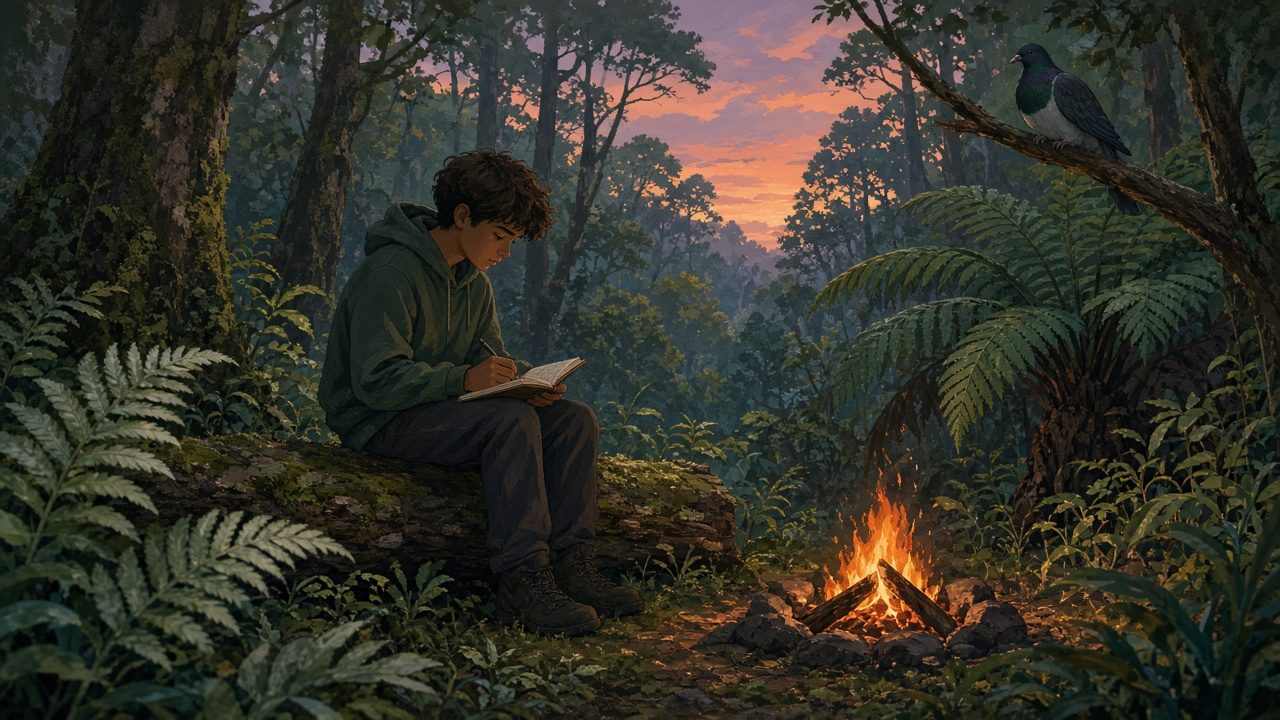
Choose one subject
Ricky’s diary
You are Ricky. You have been in the bush with Hec for a few weeks. Write a diary entry: what happened today, what you feel about Bella, Hec and the manhunt, and where you feel you belong. In the film, Ricky writes haikus: finish your entry with a haiku of your own (5, 7 and 5 syllables).
Two sides of the story
You are a New Zealand journalist. Write a short article about the manhunt that tells both sides: what the police and the child welfare services say, and what the people who know Hec and Ricky say. Give your article a headline.
A film review
Write a review of the film for a teen magazine. Present the film, give your opinion on the mix of comedy and drama, on the landscapes and on the questions it asks, and say who you would recommend it to.
Length, by level
| Level | Who | Length |
|---|---|---|
| B1 | LVB voie générale · LVB bac pro | 100 to 120 words |
| B1+ | LVA bac pro | 120 to 150 words |
| B2 | LVA voie générale | 180 to 200 words |
Checklist
- I follow the format (date for a diary, headline for an article, title and stars for a review).
- I use facts from the film and from the lesson (the Treaty, children in care, the bush).
- I use past tenses correctly (preterite, present perfect, past perfect for B2).
- I link my ideas: first, then, however, although, as a result, that’s why.
- I express feelings and opinions: I feel…, I can’t stand…, what struck me is…, I would recommend…
- I use at least five words from the lesson.
Model · Ricky’s diary
Computer voice: Daniel (British English).
Transcript
Day nine in the bush. Today Hec showed me how to find water near the ferns. He says the bush gives you everything if you shut up and listen. That’s a lot of shutting up for me.
I still think about Bella. Her birthday song for me was the worst song in the world, and the best. Nobody ever sang for me before.
This morning we heard a helicopter. Hec says the whole country is looking for us. On the radio they say he kidnapped me. That’s not true. I chose to be here.
I’m tired, I’m hungry and my feet are majestically destroyed. But for the first time, I’m not the bad egg in someone’s file. Out here, I’m just Ricky.
Haiku of the day:
Trees tall as towers.
Nobody here knows my name.
The bush does not care.
Model · Film review
Computer voice: Isabella (British English).
Transcript
Hunt for the Wilderpeople: a road movie without roads. Taika Waititi’s 2016 film follows Ricky, a Māori foster kid, and Hec, a grumpy old bushman, on the run in the New Zealand bush. What I liked most is the mix of tones. One minute you laugh at the chapter titles and the silly police chase, the next minute you are moved by grief and loneliness. The landscapes are breathtaking, and the camera often makes the two heroes look tiny, as if the bush were the real main character. The film also asks serious questions: who decides where a child belongs? Why do the media turn an old man and a boy into dangerous criminals? Some scenes are hard, especially the deaths, but they are never there just to shock. I would recommend it to anyone over twelve who likes adventure, humour and stories about finding a family. Four stars out of five.
Durée conseillée : 55 min (rédaction en classe ou à la maison, sur papier ou sur l’ENT via la fiche). Les trois sujets conviennent aux deux voies ; seule la longueur change.
Grille rapide (sur 20) : respect de la consigne et du format (4) ; recevabilité linguistique (6) ; richesse du lexique (4) ; cohérence et articulation (4) ; références au film et à la civilisation (2).
Les modèles sont rédigés pour la séquence ; aucun texte du film n’y est reproduit (le haïku du modèle est original).
Session 8 · Speaking
A presentation of 4 to 5 minutes
Your task
Present the film and answer the question above, using examples from the film and from the lesson. Speak for 4 to 5 minutes, then answer questions for about 5 minutes.
Voie professionnelle: this is training for situation B of the bac pro exam (a presentation of about 5 minutes, then an exchange). Voie générale: this trains you to speak at length, argue and react to questions.
A plan that works
- Introduction (30 s) → the film (title, director, year, country), the question.
- Context (45 s) → New Zealand, Māori and Pākehā, children in care.
- Part 1: the State (1 min) → Paula, the file, the manhunt, the media.
- Part 2: the family (1 min) → Bella, Hec, a chosen family.
- Part 3: the land (1 min) → the bush, survival, healing, the Māori view of land.
- Conclusion (30 s) → your answer, a link to today (the Treaty, the 2024 hīkoi, the debate on children in care).
Useful phrases for presenting
Computer voice: Fable (British English).
Transcript
Model · Oral presentation (short version, about 2 minutes: yours should last 4 to 5 minutes, with more examples)
Computer voice: Emma (British English).
Transcript
Today I am going to present Hunt for the Wilderpeople, a film by Taika Waititi, and I will try to answer this question: who decides where a child belongs?
First, a few words about the context. The film was released in 2016 in New Zealand, a country of the Commonwealth in the South Pacific. Almost one New Zealander in five has Māori ancestors. The hero, Ricky, is a Māori boy in foster care. This is important, because in New Zealand, Māori children are much more likely to be placed in care than other children.
My first part is about the State. The child welfare officer, Paula, sees Ricky as a file, a problem to solve. She uses words like disobedience and stealing. When Ricky runs away, the State and the media build a false story: the old man becomes a kidnapper, and even a danger to the boy.
My second part is about the family. Bella gives Ricky what he never had: a birthday, a dog, a home. After her death, Hec and Ricky become a family, even if they argue all the time. The film suggests that a family is not only a question of blood.
My third part is about the land. In the bush, Ricky discovers that he can survive and that he belongs somewhere. For Māori, the land is an ancestor, and the film shows the bush as a place that heals.
To conclude, I think the film answers my question in a nuanced way. The State has the power, but the people who love the child, and the places where he feels at home, matter too. This connects to real debates in New Zealand, where Māori families ask for children to stay within their whānau.
Thank you for listening. I am ready for your questions.
Questions to practise the exchange
- Which scene moved you the most, and why?
- Is Paula a bad person, or is she just doing her job?
- Why does the film use humour to talk about serious subjects?
- What does the Treaty of Waitangi have to do with this film?
- Would this story be possible in another Commonwealth country, like Australia, where the Stolen Generations were taken from their families? Why or why not?
Peer feedback
| Criteria | Yes | Not yet |
|---|---|---|
| The speaker answers the question. | ||
| The plan is clear (introduction, parts, conclusion). | ||
| There are examples from the film and from the lesson. | ||
| The speaker speaks without reading. | ||
| The pronunciation is clear; the speaker reacts to questions. |
Durée conseillée : deux séances (préparation, puis passages). Mêmes critères pour les deux voies ; l’exigence de durée et d’autonomie varie selon le niveau (voir le tableau de l’accueil).
Bac pro : situation B = présentation d’environ 5 minutes puis entretien d’environ 5 minutes. Voie générale : entraînement à la prise de parole en continu et en interaction.
Session 9 · Final task
Family Court: where should Ricky live?
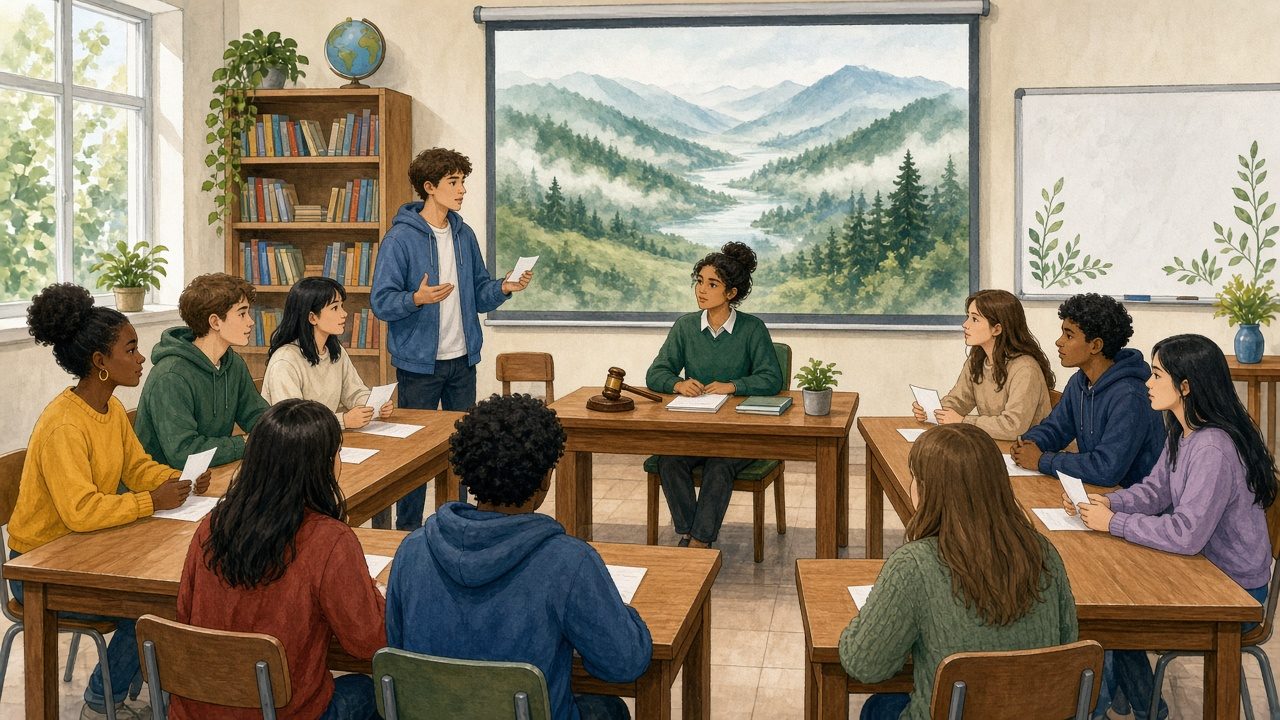
The situation
The manhunt is over. A Family Court judge must decide where Ricky will live. Everybody speaks, then the judge decides. Remember: in a Family Court, the child’s interest comes first.
Useful language
Arguing
In my view… · The evidence shows that… · Let’s not forget that… · What matters most is…
Reacting
With respect, I disagree… · That’s a fair point, but… · How can you say that…? · I’d like to add that…
Conceding
I admit that… · Even if… · It’s true that…, however…
Deciding (judge)
Having heard everyone… · The court has decided that… · For these reasons…
Model · Family Court hearing
Computer voices: Daniel, Emma, George, Isabella, Lewis (British English).
Transcript
The judge: The Family Court is now in session. We are here to decide where Ricky Baker should live. Paula, for the child welfare services, you may begin.
Paula: Thank you, Your Honour. Ricky ran away, he lived in the bush for months, and he was in danger. The State is responsible for his safety. He needs a stable foster home, with rules.
Hec: With respect, the State moved him from house to house for years. He was only happy once: with my wife Bella, on our farm. I’m not perfect, but the boy trusts me.
Whānau representative: Your Honour, I speak for the whānau. Ricky is Māori. Whatever you decide, he must stay connected to his people, his language and his land. Taking a child away from his culture has hurt too many families.
The child’s lawyer: As Ricky’s lawyer, I remind the court that his voice matters. He is barely a teenager. He has told us clearly where he feels he belongs.
The judge: Thank you. The court will take every view into account. The child’s interest comes first.
How it works
- Preparation in groups (15 min): three arguments, one example from the film, one fact from the lesson.
- Opening statements (1 min each).
- Free exchange, led by the judge (15 min).
- The judge’s decision, then a class vote: do you agree with the decision?
Closing: beyond the film
A nuanced closing
Computer voice: Emma (British English).
Transcript
To close our debate, let’s step back from the film. Is New Zealand a model of reconciliation? Yes and no. Yes, because te reo Māori is an official language, because the Waitangi Tribunal listens to Māori claims, because a forest and a river have been recognised as legal persons, and because, in April 2025, Parliament rejected a bill that wanted to redefine the Treaty, after a huge hīkoi. But no, because Māori children are still over-represented in State care, and because, the same week, Parliament removed section 7AA, a Treaty commitment in the child welfare law. Reconciliation is not a finished story. It is a debate that New Zealanders are still having today, and the film, with humour and with drama, invites us into it.
Final reflection
Back to our question: who decides where a child belongs: the State, the family, or the land? Write your personal answer in three or four sentences.
Durée conseillée : 55 min à 1 h 30. Répartir les huit rôles (doubler certains rôles en grand groupe). Évaluer l’interaction : réactivité, pertinence des arguments, recevabilité de la langue.
Nuance attendue : avancées (langue officielle depuis 1987, Tribunal de Waitangi depuis 1975, Te Urewera en 2014, Whanganui en 2017, rejet du Treaty Principles Bill le 10 avril 2025 par 112 voix contre 11 après la hīkoi de novembre 2024) et reculs (abrogation de la section 7AA le 8 avril 2025 ; surreprésentation persistante des enfants māori parmi les enfants placés).
Credits
- Photo of Jonah Lomu (28 August 2007): New Zealand Government, Office of the Governor-General, CC BY 4.0, via Wikimedia Commons (cropped by a Commons contributor from the original).
- Photo of Whina Cooper in Hamilton (25 September 1975): Christian Heinegg, C F Heinegg Collection, Alexander Turnbull Library, Wellington, reuse permitted (permission given by the Alexander Turnbull Library), via Wikimedia Commons.
- Photo of the Māori Land March on the Auckland Harbour Bridge (1975): Ministry of Works, Archives New Zealand (ref. BCCH 10887-1s), CC BY-SA 2.0, via Wikimedia Commons.
- Photo Te Whare Rūnanga: New Zealand Government, Office of the Governor-General, CC BY 4.0, via Wikimedia Commons.
- Te Tiriti o Waitangi, Waitangi sheet: Archives New Zealand, CC BY 2.0, via Wikimedia Commons.
- Native bush, Waitākere Ranges: Ingolfson, public domain, via Wikimedia Commons.
- Map: drawn for this lesson from Natural Earth data (public domain).
- Illustrations (bush, diary, court, wharenui): created for this lesson.
- Recordings: computer-generated British voices (Kokoro); no New Zealand voice available.
- Trailer: official trailer, 1091 Pictures, embedded from YouTube. No extract of the film is reproduced on this site.
- Link-preview image (shown when the site is shared): collage made for this site from three cropped photos, shared under CC BY-SA 4.0. Aoraki/Mount Cook: Michal Klajban, CC BY-SA 4.0, via Wikimedia Commons. Little spotted kiwi at Zealandia, Wellington: Judi Lapsley Miller, CC BY 4.0, via Wikimedia Commons. Haka during a pōwhiri in Auckland (21 September 2012): US Department of Defense, photo by Erin A. Kirk-Cuomo, public domain, via Wikimedia Commons.


